
Work Positioning Harnesses

Work Positioning Harnesses

Product Details:

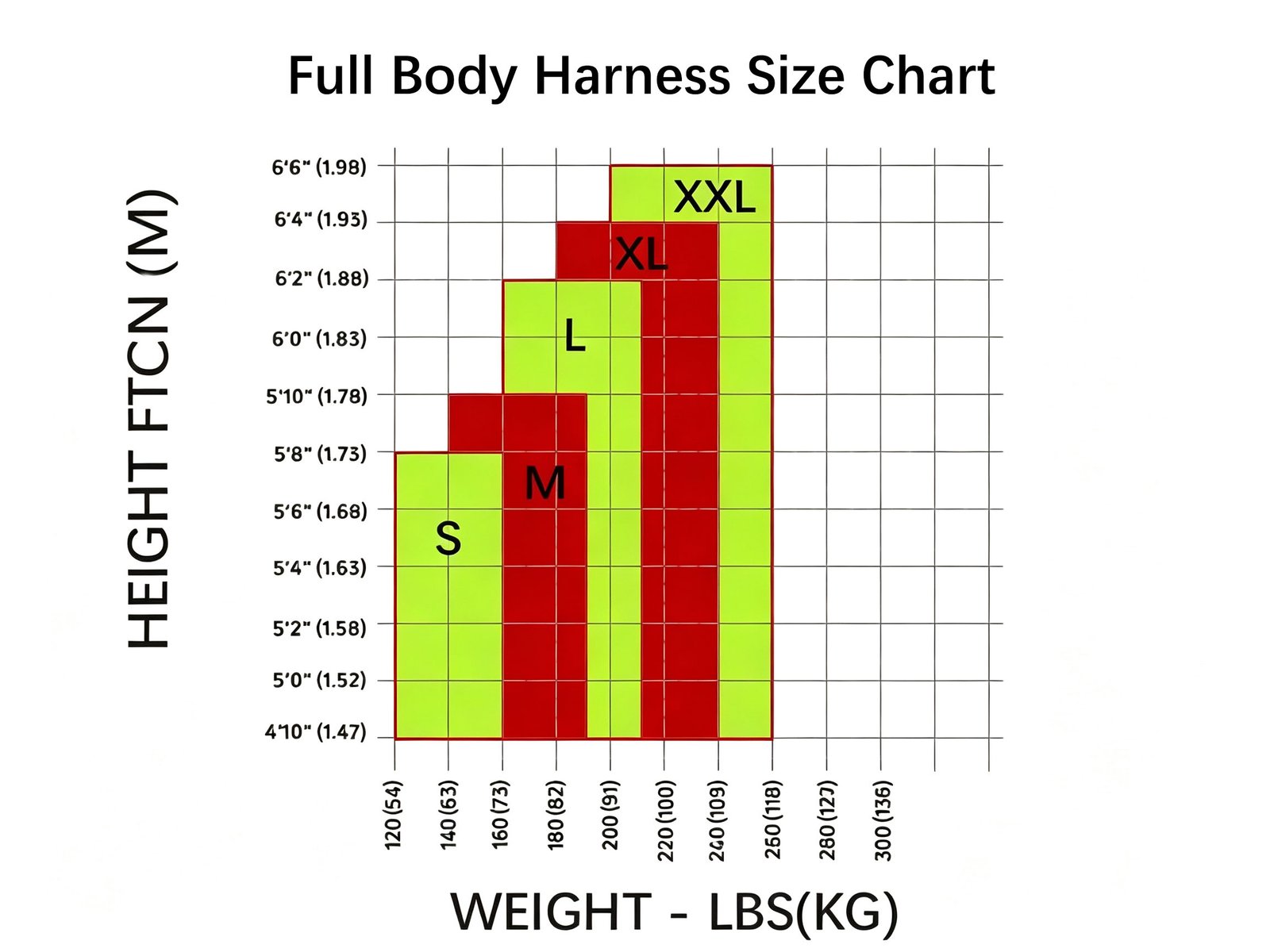
  • Dimensions: S-XL (Universal Size)
  • Webbing width: Ø 45mm ± 1mm
  • Material: Webbing – 100% High-strength PES
  • Static Strength: 22 KN/3min
  • Dynamic Performance: < 6 KN
  • Certifed to: EN361, EN358, CE, ANSI
  • Note: Custom color, labeling, branding, packaging, and OEM options available for all products.
Visit the GREX Store

Positioning Harnesses Features

Structure Design

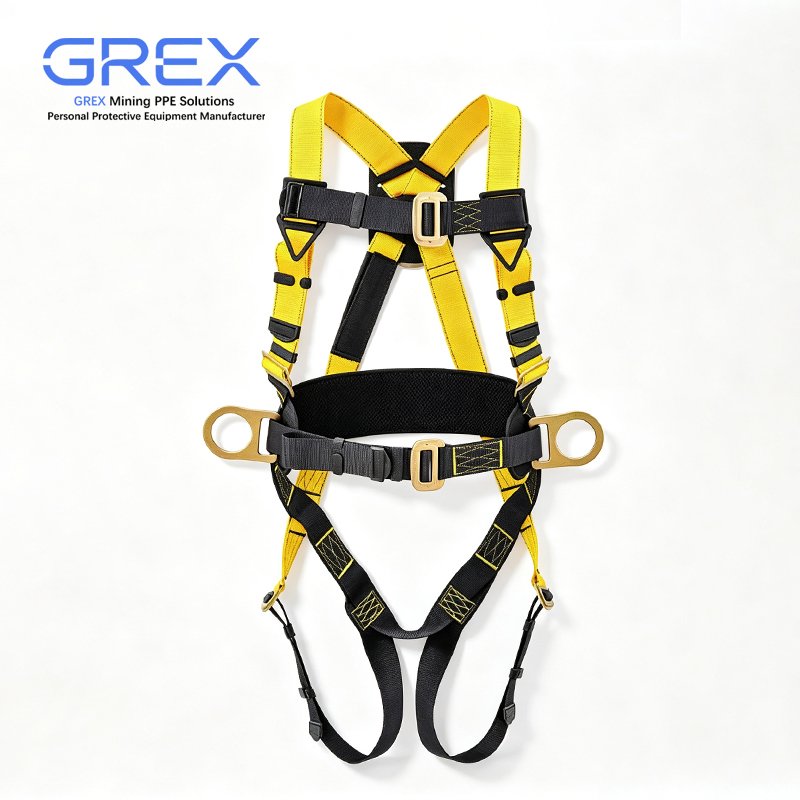
No thick padded waist belt;side positioning D‑rings are mounted directly on hip webbing.


Light‑weight overall structure, reduce long‑time wearing fatigue for mixed‑condition mine work.

Safety note:Side D‑rings are only for work‑positioning, not allowed for fall‑arrest use.


  • > Back D‑ring:Main fall‑arrest anchor point,complies with EN 361,primary for fall‑arrest protection when working at height.
  • > Chest D‑ring:For vertical shaft /ladder climbing only,suitable for underground mine shaft vertical access.
  • > Dual side hip positioning D‑rings:Meet EN 358 work‑positioning standard,connect positioning lanyards to realize hands‑free suspended operation for equipment maintenance.
Corrosion‑resistant Alloy Hardware

Alloy metal buckles & D‑rings, anti‑rust & anti‑corrosion, adapt to humid underground mining conditions.


Quick‑adjust buckles on shoulder & leg straps, fast size adjustment, easy donning & doffing by miners.

High‑tensile industrial polyester webbing, yellow‑black high‑visibility color scheme, fits dim underground mine environment.


Key stress‑bearing joints adopt multi‑layer reinforced stitching, resist abrasion from rock, dust and sharp ore.

Faq's

Note!: Protecting against falling risks is GREX®’s top priority!

It is necessary to receive adequate training (knowledge of techniques and security measures) before using the tools. Incorrect use or improper maintenance could lead to serious accidents even fatal. Please read carefully or learn enough knowledge before use.

Note!: Protecting against falling risks is GREX®’s top priority!

It is necessary to receive adequate training (knowledge of techniques and security measures) before using the tools. Incorrect use or improper maintenance could lead to serious accidents even fatal. Please read carefully or learn enough knowledge before use.

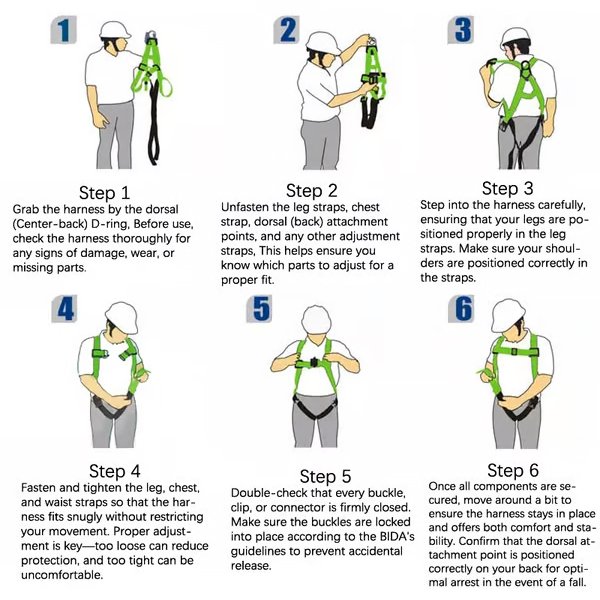
How to wear a Safety Harnesses correctly 1

1. Hold the harness by the Dorsal D-ring and shake it

Holding the harness by the Dorsal D-ring and gently shaking it will let the straps fall into the right place, making the putting on process easier.

How to wear a Safety Harnesses correctly 2

2. Undo the buckles and release the straps​

If the chest or the leg straps came in buckled conditions, unbuckle them and release the tension on the straps.

How to wear a Safety Harnesses correctly 3

3. Slips the strap over your shoulder and adjust the fit​

Ensure the Dorsal D-ring is placed in the middle of the back, in between of the shoulder blades.

How to wear a Safety Harnesses correctly 4

4. Connect the leg straps​

The chest straps should fit snuggly and keeping the body harness to remain in place.

How to wear a Safety Harnesses correctly 5

5. Connect the chest straps​

The chest straps should fit snuggly and keeping the body harness to remain in place.

How to wear a Safety Harnesses correctly 6

6. Adjust the straps so the harness fit snuggly but still allows a full range of motion

When the leg straps are buckled, it should fit snuggly without impacting you to stand straight.

Important Notes:

Before putting on the full-body harness, please note the following three points:

1. Check the harness for damage, such as frayed or loose threads, cracks in the webbing, or foreign objects adhering to it.
2. Ensure that the metal buckles and D-rings are free from cracks or deformation.
3. Once you put on the harness, always tuck the loose ends of the straps into the strap’s retainers.

We cannot stress enough that using the right equipment when working at height could save your life one day, so it’s vitally important that users are trained to inspection components such as a harness correctly.


Pre-use checks need to be carried out before each use and include the following physical inspections:


  • Check the label – make sure that the label has an individual serial number, with valid inspection and manufacturing dates.
  • Anchor (Sternal/Dorsal etc..) – Check the condition of the D Ring for any signs of distortion, fatigue/rust, cracking, burrs, nicks, excessive wear. Make sure the ring pivots freely.
  • Webbing – Check for signs of UV damage and chemical damage (staining is an indication of chemical damage which can be identified if the harness appears brittle or hardened). Webbing must be free from cracks, cuts, fraying or excessive abrasion, even loose stitching or fading may mean the fibre structure has been compromised.
  • Buckles – Connect buckles ensuring the harness isn’t distorted and hangs correctly, making sure all rivets are tight and the buckles aren’t chipped or bent, with stitching intact.
  • Loops – Check for damaged, cracked or broken loops.
  • Straps – Inspect the clips on the straps and check for any loose stitching. Carefully check the straps for any visible signs of fraying or broken fibres.

Product Match

Need a quote on Harnesses? Send us your requirements!

Request a Quote
Visit the GREX Store